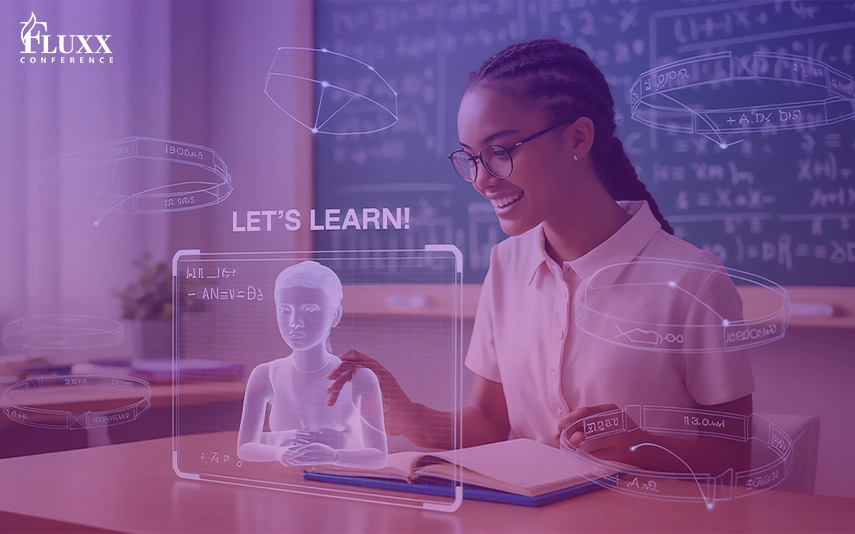
Summary: AI-powered adaptive learning revolutionizes how students and professionals learn by tailoring content to individual needs. Experts often discuss its applications at national conferences for educators and public health conferences 2025. Attendees who attend conference sessions on adaptive learning gain insights into>How AI Drives Personalization?
Adaptive learning, which is based on artificial intelligence, uses advanced machine learning algorithms to predict the needs of a learner. Such models are expected to detect knowledge gaps, cognition patterns, and preferences in order to create customized content.
As an example, natural language processing (NLP) enables AI to make sense of open-ended answers, and quiz and exercise analytics determine the further learning process. AI should prescribe individual resources, dispel myths, and give immediate feedback.
Applications in Education and Public Health
Adaptive learning is not limited to traditional classes. Universities, professional training, and public health programs are starting to embrace AI-based approaches in offering more personalized learning:- Public Health Training: It can be possible to use AI simulations to train professionals who will attend public health conferences in 2025 to control outbreaks, streamline patient care, or investigate the effects of policies.
- Higher Education: Educators attending national conferences typically watch demonstrations of artificial intelligence-based adaptive technology in STEM courses, languages, and research skills development.
- Corporate Training: Adaptive learning can help companies upskill their employees, and workforce development can be aligned with the specific knowledge gaps of every employee.
Benefits of AI-Powered Adaptive Learning
AI adaptive systems have significant advantages at the level of learners, teachers, and organizations: One-on-one Learning: Each student is given a different treatment depending on their strengths and weaknesses.- Real-Time Feedback: Errors are fixed as they happen, and this enhances understanding and retention.
- Efficiency on the part of the educator: Teachers should concentrate on curriculum planning and mentoring as opposed to tedious grading.
- Scalable Learning: The institutions should be able to deliver quality education to large groups without the need to undermine the student-centered education.
- Data-Driven Decisions: The schools will be able to study learning trends in order to optimize content, make future predictions, and distribute resources.
Challenges and Considerations
Nevertheless, AI-powered adaptive learning has a number of challenges, despite its potential:- Data Privacy: Systems should be able to protect the sensitive information of the learners.
- Algorithm Bias: Designers must ensure that the suggestions in the recommendations are unbiased and inclusive.
- Cost and Infrastructure: The institutions will have to invest in appropriate devices, stable internet, and training of the staff.
- Complexity of integration: Teachers will have to change lesson plans in order to support AI-based recommendations.